

Let's get straight to it: we see this question all the time. While you can technically wash your car with dish soap in a pinch, you absolutely should not. It's a tempting shortcut, but it's one that can cause some serious, long-term damage to your vehicle's paint.
Why Dish Soap Is the Wrong Tool for the Job
Think about it this way: you wouldn't use a harsh kitchen degreaser to wash your hair, right? You'd use a shampoo designed to clean gently. The same logic applies to your car. Dish soap is formulated to be an aggressive degreaser—its whole purpose is to cut through tough, caked-on grease and food on your plates.
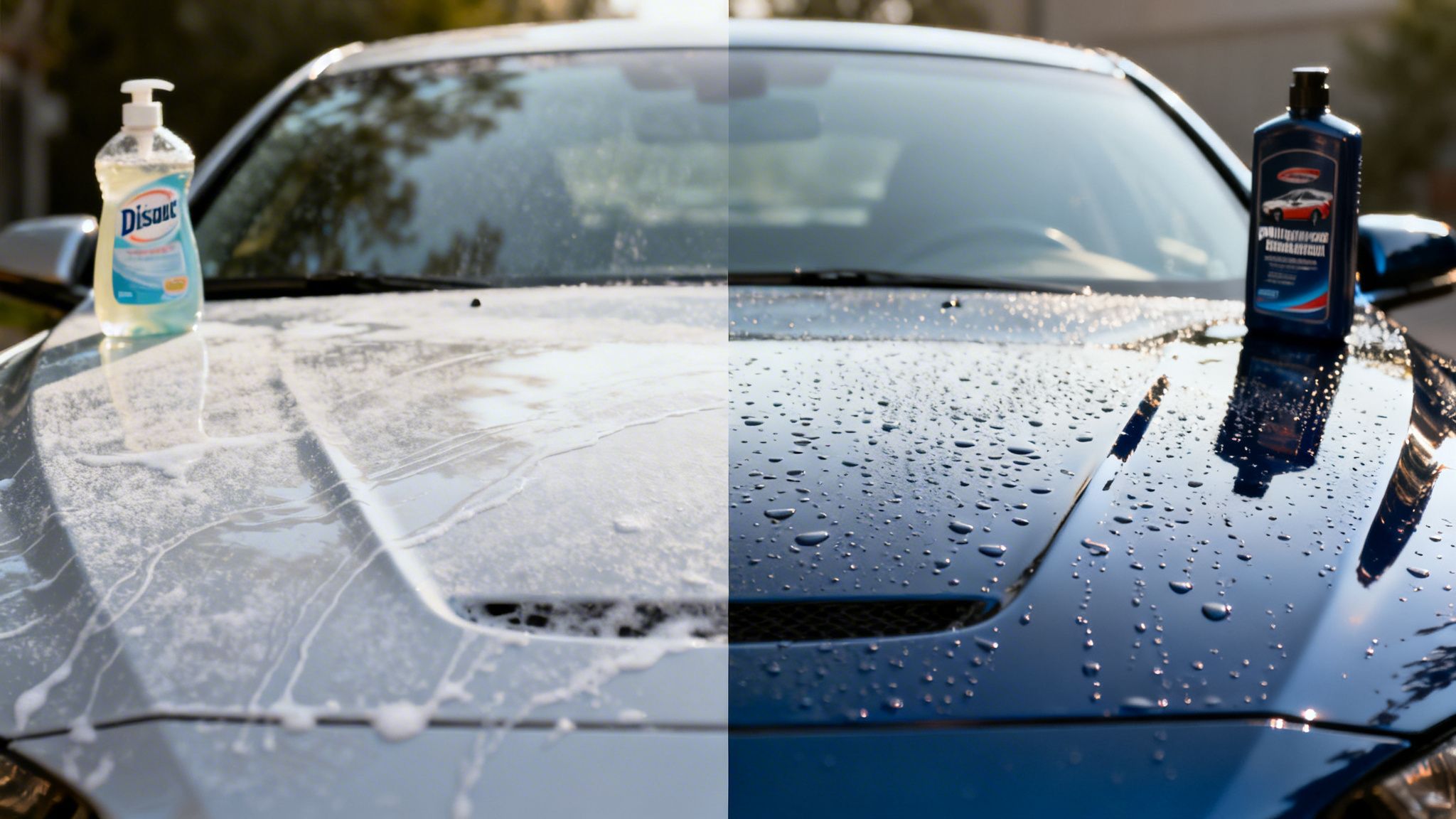
When you use that on your car, it doesn't know the difference between grime and your car's protective coatings. It simply strips away everything it touches, including the essential wax and sealant that guard your paint.
That protective layer is your car's first line of defense against UV rays, acid rain, bird droppings, and road salt. Once it's gone, you've left your paint's clear coat exposed and vulnerable.
The Problem With High pH Levels
Beyond stripping wax, the very chemistry of dish soap is bad news for your paint. Studies have found that while nearly 18% of drivers admit to using dish soap, its high pH can speed up clear coat failure by up to 35% compared to a proper car wash soap.
This high alkalinity actively works against your paint, causing oxidation that leads to a dull, chalky, and faded appearance over time. This concept isn't unique to cars; you can read about the importance of mild soap for cleaning without damage on other sensitive surfaces, too.
To make the difference perfectly clear, let's break it down side-by-side.
Dish Soap vs Car Wash Soap At a Glance
| Feature | Dish Soap (e.g., Dawn, Palmolive) | Dedicated Car Wash Soap |
|---|---|---|
| pH Level | High (Alkaline) | pH-Neutral |
| Primary Function | Strips grease and oil from dishes | Gently lifts dirt and grime from automotive surfaces |
| Effect on Wax/Sealant | Strips and dissolves protective layers | Preserves and enhances wax and sealant layers |
| Lubrication | Low; can cause fine scratches during washing | High; provides lubrication to prevent swirl marks |
| Long-Term Effect on Paint | Causes fading, oxidation, and clear coat degradation | Protects and maintains the paint's gloss and clarity |
| Rinsing | Can leave a film or residue that's difficult to rinse completely | Rinses cleanly without leaving spots or streaks |
| Best For | Baked-on lasagna | Safely cleaning your vehicle's exterior |
The takeaway is simple: dish soap is for dishes. For your car, always stick with a product designed specifically for the job.
Protecting your car’s finish is a key part of regular upkeep that preserves its value and appearance for years. For more tips on keeping your vehicle in top shape, our car maintenance checklist is a great place to start.
How Dish Soap Chemically Damages Your Car's Paint
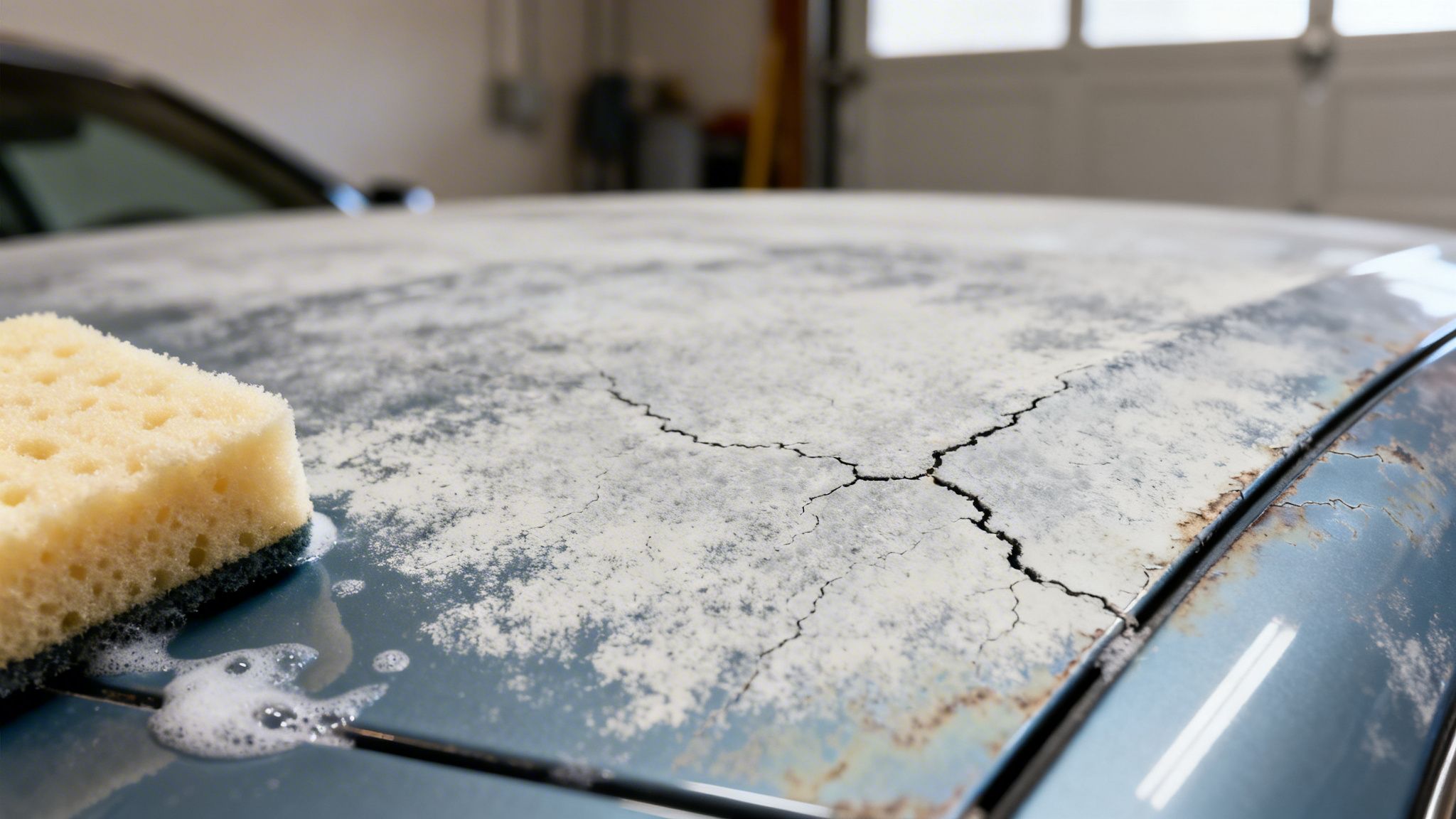
So, why do car care professionals give a firm "no" when asked if dish soap is safe for a car wash? It all comes down to some pretty simple chemistry. Dish soaps are packed with powerful surfactants—chemicals designed to be ruthless on grease from pots and pans. They work incredibly well in the kitchen.
The problem is, those same heavy-duty surfactants can't tell the difference between baked-on food and the protective layer of wax or sealant on your vehicle. They just see "oils" and attack, stripping away your car's most important defense against the sun and rain.
Think of your car’s wax coat like sunscreen for its paint. Dish soap washes that sunscreen right off, leaving the clear coat completely exposed to harsh UV rays, acid rain, and bird droppings.
Once that protective barrier is gone, the damage starts happening on a microscopic level. Your car’s clear coat, now totally vulnerable, begins to break down much faster than it ever should.
The Problem With pH and Oxidation
It isn't just about stripping wax, either. Most dish soaps are highly alkaline, with a pH level around 9 or 10. Your car's paint, on the other hand, is designed to be stable in a neutral pH environment, which is closer to 7.
This chemical imbalance is abrasive and dramatically speeds up paint oxidation. That’s the process that makes a car's finish look dull, chalky, and faded. Using dish soap is essentially a shortcut to a dull finish and a costly paint correction job.
In fact, research from Kelley Blue Book found that using dish soap repeatedly could strip a car's wax in just 3-5 washes. Worse, it can increase the rate of paint oxidation by up to 40%. You can see more of their findings on why dish soap damages car paint.
- Dish Soap: Highly alkaline and designed to strip everything away.
- Car Paint: Needs a neutral pH to stay protected and vibrant.
- The Result: Accelerated oxidation that leads to a dull, faded, and damaged finish.
This chemical assault is exactly why you should always stick to a dedicated, pH-neutral car wash soap.
The Hidden Damage of Scratches and Swirl Marks
Aside from the chemical attack, dish soap also causes serious physical damage every time you wash. A good car wash soap is packed with special lubricants that create an ultra-slick barrier between your wash mitt and the paint.
This lubrication is everything. It allows the mitt to glide smoothly across the surface, lifting dirt and grime away so it doesn't get ground into your car's clear coat.
Friction and Fine Scratches
Dish soap has almost zero lubrication. Think about sliding across a dry floor in your socks versus a freshly mopped one—that’s the difference. When you use dish soap, you're basically dragging a rough mix of dirt and grit across your paint with every single wipe.
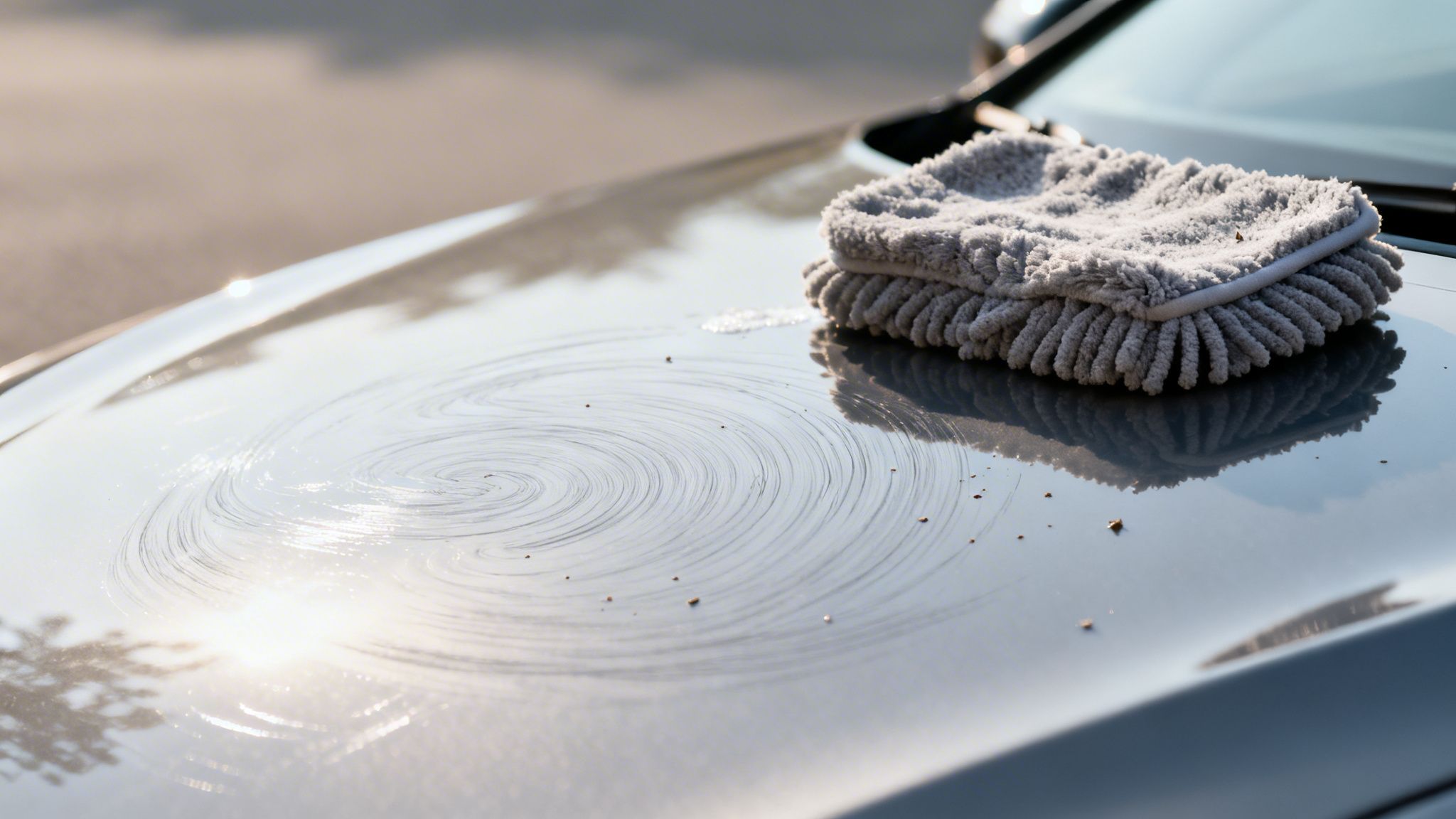
All that friction creates a web of tiny, microscopic scratches. We call these swirl marks.
Those ugly swirl marks are easiest to see in direct sunlight. They look like a spiderweb pattern that completely kills your paint's gloss and shine, robbing your car of that deep, mirror-like finish.
Even if you have a perfect two-bucket wash setup, the lack of slipperiness from dish soap makes these scratches almost guaranteed. That "cheap" wash stops feeling like a bargain when you see the bill for professional paint correction to fix the damage.
- Proper Car Soap: Its high-lubricity formula protects your paint from friction.
- Dish Soap: The low-lubricity formula turns dirt into sandpaper.
- The Result: A dull finish covered in swirl marks and micro-scratches.
This is a key reason why the answer to "Can you use dish soap for a car wash?" is a firm no if you care about your car's appearance. The physical damage will quickly ruin your vehicle's finish.
When Can You Use Dish Soap on Your Car?
So, is there ever a time when using dish soap on your car is a good idea? Surprisingly, the answer is yes, but only in very specific and controlled situations. In fact, professional detailers sometimes reach for it on purpose.
Think of an older car with a layer of wax that’s become hazy, patchy, and ineffective. A detailer might use a carefully mixed dish soap solution to completely strip that old protection off the paint. Here, they're using its harshness as a tool to get a clean slate before starting a full paint correction and applying a fresh ceramic coating or sealant. It's a strategic first step in a much bigger restoration project.
In Case of Emergency
But what about for the rest of us? Let’s say you’re on a road trip when a bird leaves a nasty surprise on your hood. If you let that bake in the sun, it can quickly etch into your clear coat. You don’t have any proper car soap with you.
This is the only time you should consider it. A very, very diluted dish soap solution is better than letting that contaminant cause permanent damage.
Emergency Spot-Cleaning Only: Mix just one or two drops of dish soap into a large bucket of water. Use this to gently clean only the affected spot. Rinse the area thoroughly, and—most importantly—apply a quick spray wax right after to add some protection back to that spot.
Think of this as damage control, not a real wash. It’s a calculated risk to save your paint in a pinch. And remember, even in an emergency, be aware of other factors like the challenges of washing a car in freezing weather.
Choosing the Right Products for a Perfect Car Wash
So we've established that dish soap is a bad idea for your car's paint. What’s the right way to get that brilliant, damage-free shine at home? It all starts with choosing the right products.
A quality car wash soap is designed to do the opposite of dish soap. It gently lifts away dirt, grime, and road gunk without stripping away the wax or sealant that protects your paint. It cleans effectively while being gentle on your car's delicate finish.
What to Look for in a Car Wash Soap
With so many options on the shelf, it’s easy to get overwhelmed. But there are two features that really matter.
First, always look for a pH-neutral formula. Think of it like this: acidic or alkaline cleaners can chemically attack your car's clear coat, just like dish soap. A pH-neutral soap is balanced and safe for all the surfaces on your vehicle.
Second, you need high lubricity. A good car soap should feel incredibly slick. This slickness creates a slippery barrier that lets your wash mitt glide over the surface, lifting dirt away instead of grinding it into the paint. This one thing is your best defense against causing swirl marks and fine scratches. For the best results, always follow proper car cleaning methods that prioritize safety and lubrication.
This diagram shows what happens when you use a harsh soap—it strips everything off, forcing you to re-apply protection just to get back to where you started.
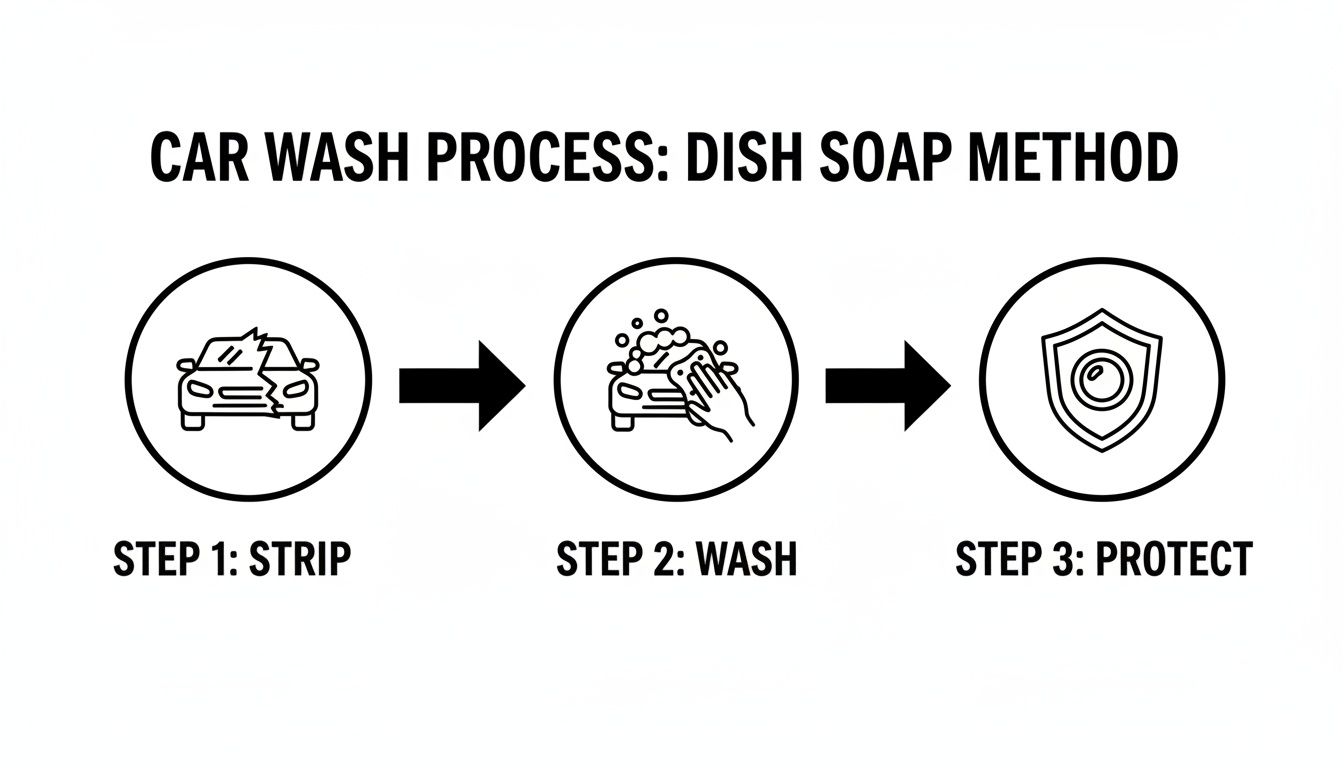
As you can see, using a stripping agent just creates more work.
Step-By-Step: The Two-Bucket Method
This is the gold standard for a safe hand wash, used by professional detailers everywhere. It’s simple, and it dramatically reduces the risk of scratching your paint.
- Prep Your Buckets: Get two buckets. Fill one with your car soap solution and the other with plain, clean water for rinsing. A Grit Guard at the bottom of each bucket is a fantastic, cheap investment.
- Wash a Section: Dip your clean microfiber wash mitt into the soapy water. Gently wash a small section of your car, starting from the roof and working your way down.
- Rinse the Mitt: Here’s the key step. Before going back for more soap, rinse the now-dirty mitt in the plain water bucket. Swirl it around against the Grit Guard, and you'll see all the trapped dirt and grit fall to the bottom.
- Repeat: Now that your mitt is clean again, dip it back in the soap bucket and move on to the next section of the car.
By keeping the dirt isolated in a separate rinse bucket, you stop yourself from scrubbing that same grit right back into your paint. It’s the single most effective way to prevent swirl marks and maintain a flawless finish.
Using this method with a quality car soap will put your at-home washes on a professional level. For more tips on keeping your vehicle in top shape, check out our other guides on essential vehicle maintenance.
A Few More Car Wash Questions Answered
We get a lot of questions about the dos and don'ts of car washing. Let's clear up a couple of the most common ones so you can wash your car with confidence.
How Often Should I Wash My Car?
A good rule of thumb is to wash your vehicle every two weeks. That said, if you've parked under a sappy tree, been dive-bombed by birds, or driven on salted roads, you’ll want to wash it off much sooner to prevent the contaminants from eating into your paint.
Can I Use Other Household Cleaners on My Car?
Absolutely not. Cleaners like laundry detergent, glass cleaner, or hand soap are a definite no-go. Just like dish soap, they’re formulated for entirely different jobs and are far too harsh for automotive surfaces, stripping away wax and leaving your paint vulnerable.
A touchless car wash, while using strong chemicals and high pressure, is still a far better choice than grabbing the dish soap. Using an abrasive cleaner like that pretty much guarantees you’ll be stripping off wax and creating fine scratches with every wash.
For professional advice you can count on and service that keeps your car looking its best, trust the ASE-certified team at Express Lube & Car Care. When your vehicle needs more than a simple wash, stop by for the fast, dependable service you deserve. Learn more about our services.