

Life gets full fast, and car maintenance is usually the first thing that falls off the list. But a neglected car doesn’t stay quiet for long. Following a car care checklist for busy schedules means you spend maybe 15 minutes a month catching small issues before they turn into expensive ones. This guide gives you a practical, grouped approach to essential vehicle upkeep tasks so you’re not wasting time or missing anything critical. Whether you’re doing a quick monthly pass or prepping for a seasonal change, here’s how to maintain a car quickly without cutting corners.
Table of Contents
- Key takeaways
- What goes on a car care checklist for busy schedules
- The step-by-step car maintenance checklist
- Caring for a car you don’t drive often
- Seasonal car care without the extra hassle
- Common mistakes busy car owners make
- My honest take on car care and busy life
- We make quick maintenance easy in Richland Hills
- FAQ
Key takeaways
| Point | Details |
|---|---|
| Group tasks by location | Checking tires, then fluids, then lights in one pass saves significant time per session. |
| Owner’s manual is your backbone | Use manufacturer indicators and intervals to schedule maintenance without guessing. |
| Monthly checks are enough | Tire pressure, fluid levels, and lights checked monthly keeps most vehicles in safe condition. |
| Low-use cars need attention too | Even parked vehicles need regular short drives and monthly inspections to stay road-ready. |
| Seasonal tweaks are minimal | Adjusting only a few high-impact items per season keeps your routine lean and effective. |
What goes on a car care checklist for busy schedules
Before you start checking anything, take five minutes to pull out your owner’s manual and skim the manufacturer’s recommended intervals. This single step removes most of the guesswork. Every car is a little different, and what works as a general guideline may not match your specific model’s needs.
Here are the basic supplies you want on hand for any quick maintenance session:
- A tire pressure gauge (digital ones are faster and easier to read)
- A flashlight for checking under the hood and around tires
- Clean rags or paper towels for checking fluid levels
- A funnel for topping off fluids without spills
- Your owner’s manual or a downloaded copy on your phone
Think of car care like a doctor’s visit. You want to arrive prepared, not scrambling. Grouping your tools in a small box in your trunk means you’re ready whenever you have ten minutes in the driveway.
Safety matters too, even for basic checks. Make sure the engine is cool before checking coolant levels. Park on a flat surface before checking oil. Keep the car in park with the brake engaged if you’re checking anything underneath. None of this takes extra time; it’s just habit.
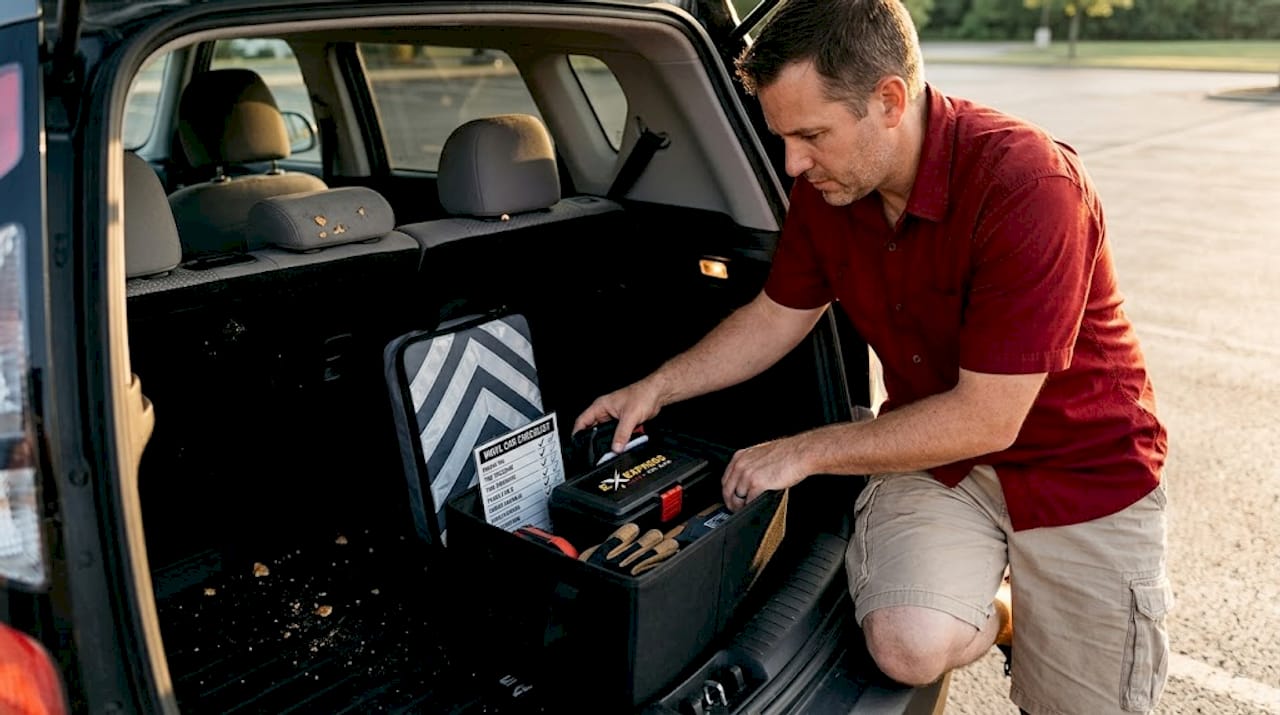
Pro Tip: Set a repeating monthly calendar reminder labeled “Car Quick Check” and attach a photo of your checklist to the event. When the reminder pops up, you have everything in front of you already.
The step-by-step car maintenance checklist
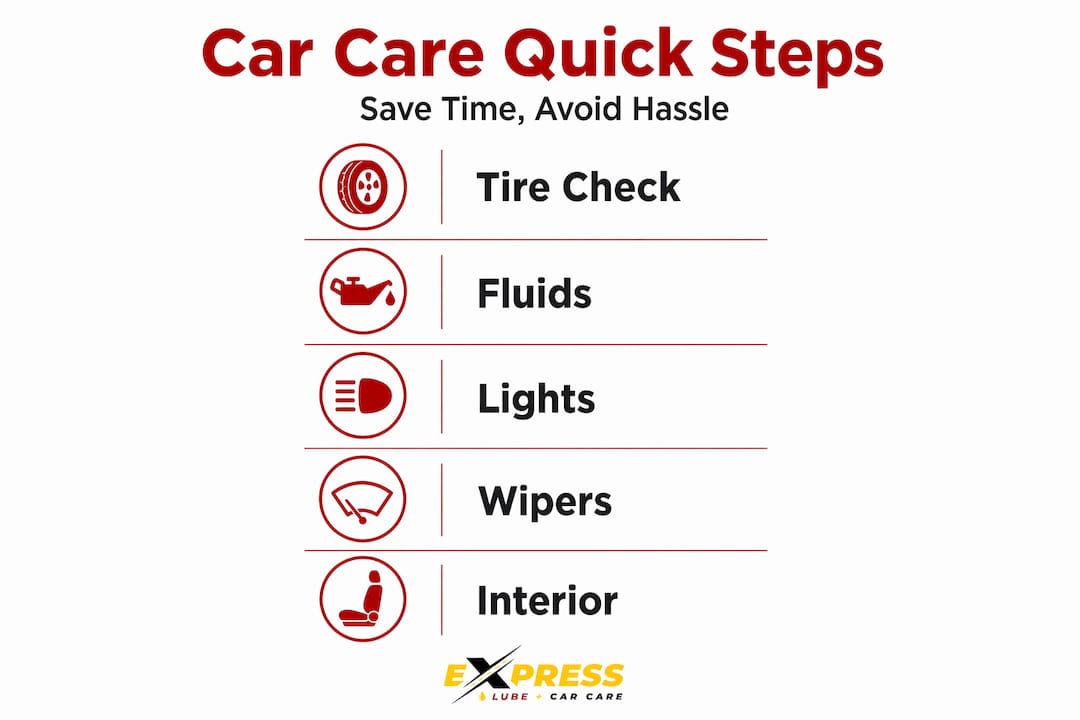
The most efficient way to run through your car care for busy people is to work in physical zones. Start outside the car, work your way around, then open the hood. You cover everything without backtracking.
Monthly checks: outside the car
- Tire pressure. Use your gauge on all four tires and the spare. Monthly tire pressure checks are practical and safe for most drivers. Your door jamb sticker shows the correct PSI for your vehicle.
- Tire tread depth. Do a visual check for uneven wear patterns. Uneven wear often signals alignment or suspension problems worth addressing. For a thorough method, check this guide on tire tread inspection.
- Lights. Walk around and check headlights, taillights, brake lights, and turn signals. Have someone press the brake pedal while you check the rear.
- Windshield wipers. Look for streaking, skipping, or cracked rubber. These are cheap to replace and matter a lot in heavy rain.
Monthly checks: under the hood
- Engine oil. Pull the dipstick, wipe it clean, reinsert it, and pull again. The oil should fall between the two marks and look amber, not black and gritty.
- Coolant. Check the overflow reservoir level. Do not open the radiator cap when the engine is hot.
- Brake fluid, power steering fluid, and windshield washer fluid. Most reservoirs are translucent, so you can check the level without opening them. A detailed breakdown of each fluid’s role is in this fluid maintenance guide.
- Battery terminals. Look for white or blue corrosion buildup around the terminals. A quick visual is enough at this stage.
Pro Tip: Your vehicle’s oil change indicator is one of the most useful tools you’re probably ignoring. Many modern vehicles, like the 2025 Jeep Grand Cherokee, alert you within 500 miles of the required service interval. Treat that alert as a hard deadline, not a suggestion.
Here’s a quick reference for how often key tasks should happen:
| Task | Frequency | Notes |
|---|---|---|
| Tire pressure check | Monthly | Use door jamb sticker for correct PSI |
| Oil and filter change | Per indicator or 5,000–10,000 miles | Follow owner’s manual interval |
| Tire rotation | Every 5,000–7,500 miles | Check owner’s manual for specifics |
| Air filter inspection | Every 12,000–15,000 miles | Replace sooner in dusty conditions |
| Wiper blade replacement | Every 6–12 months | More often in harsh weather climates |
| Coolant flush | Every 2–5 years | Check owner’s manual for exact interval |
Bundling tasks into physical clusters is one of the most practical time-saving strategies available. Checking tires, then fluids, then lights in a single pass takes about 15 minutes once you get the rhythm down. You can follow a detailed maintenance schedule by mileage to make sure you’re not missing any interval-based items.
Caring for a car you don’t drive often
If your car sits in the driveway most of the week, it still needs regular attention. The problems that show up in low-use vehicles are sneaky because the car looks fine on the outside while things degrade quietly underneath.
Vehicles that sit unused should be started and driven for at least 20 minutes every one to two weeks. That short drive does three things: it circulates oil through the engine, it charges the battery, and it keeps the brakes from developing rust patches on the rotors.
Here’s what to inspect monthly if your vehicle sits for extended periods:
- Tires. Look for flat spots, cracking on the sidewalls, and pressure loss. Tires lose about one PSI per month just from temperature changes.
- Fluids. Oil can degrade even without driving. If your car has sat for six months, change the oil before driving it regularly again.
- Belts and hoses. Look for cracking, fraying, or any sign of brittleness. These components age whether or not you’re putting miles on the car.
- Rodent damage. Parked cars are prime real estate for mice and squirrels. Check under the hood for chewed wires, nesting material, or droppings.
- Undercarriage. If you can safely look underneath, check for rust, fluid leaks, or anything hanging loose.
Pro Tip: If your car sits for more than a few weeks at a time, a battery tender (also called a trickle charger) is worth every dollar. It keeps the battery at the right charge level without overcharging, so you’re not stranded by a dead battery when you actually need the car.
Flat spots in tires are a real issue if the car sits for months. Consumer Reports recommends using jackstands to lift the vehicle off the tires if storage will exceed several months. It sounds extreme, but replacing four tires because they developed flat spots is far more painful than a one-time setup.
Seasonal car care without the extra hassle
Adjusting your maintenance routine for each season does not have to mean a completely different checklist. You’re really just adding a few targeted checks on top of your monthly routine.
Focus on these high-impact items each season:
- Fall/Winter prep. AAA recommends replacing wipers twice a year and checking coolant levels before cold weather arrives. In North Texas winters, you may not face extreme cold, but sudden temperature drops still stress batteries and tires. Consider a quick winterizing checklist to keep things organized.
- Spring. Check your air filter after pollen season, inspect wiper blades for wear from winter use, and look for any rust or corrosion that may have developed.
- Summer. The cooling system takes the hardest hit in summer heat. Verify coolant is at the correct level and concentration. Check tire pressure more frequently since heat causes pressure to rise.
Pro Tip: Link seasonal checks to something you already do. A lot of people do spring cleaning in March and a pre-holiday car check in November. Tying your seasonal car prep to those existing habits means it never gets skipped.
For a deeper look at preparing for colder months specifically, winter car care prep covers items like antifreeze concentration and winter wiper performance in detail.
Common mistakes busy car owners make
Even with a solid checklist, a few habits can quietly undermine your efforts. These are the most common ones worth knowing about.
- Ignoring dashboard warning lights. A check engine light or tire pressure warning is not a suggestion to check it later. These lights exist because something needs attention now, not next month.
- Skipping professional service. DIY checks complement professional servicing but do not replace it. A trained technician catches things that are invisible to a quick visual inspection.
- Checking fluids incorrectly. Oil checked on an uneven surface gives a false reading. Coolant opened on a hot engine is dangerous. Small mistakes in technique lead to bad data and poor decisions.
- Using one generic schedule for every car. Your owner’s manual is the primary maintenance source for good reason. General guides are helpful, but your specific vehicle’s requirements always take priority.
Skipping oil changes to save time is one of the most expensive shortcuts in car ownership. A $70 oil change beats a $4,000 engine repair every single time.
Pro Tip: If you find yourself unsure whether something needs professional attention, err on the side of getting it checked. A quick diagnostic from a trusted shop costs far less than the repair that follows from waiting too long.
My honest take on car care and busy life
I’ve seen a lot of vehicles roll into the shop that could have avoided major repairs with nothing more than consistent monthly attention. What strikes me most is that it’s rarely about not caring. People are busy, and car maintenance feels like it needs a whole afternoon. It does not.
What actually works, in my experience, is treating car care the way you treat brushing your teeth. You do not think about it, you do not schedule a big event for it, you just build it into your existing rhythm. Fifteen minutes once a month in the driveway handles most of what goes wrong between professional service visits.
I’ve also learned that the owner’s manual is the single most underused tool most drivers have. It removes the guesswork entirely. You do not need to remember every interval if you check it once a year and set your reminders accordingly.
One trade-off I want to be honest about: DIY checks are valuable, but there are limits. You can catch a low tire or a dirty air filter. You cannot catch a hairline crack in a brake rotor or a failing wheel bearing. That’s what professional servicing is for. The smartest approach is consistent DIY checks paired with scheduled professional visits. Neither one alone is enough.
— Express Lube & Car Care
We make quick maintenance easy in Richland Hills
At Express Lube & Car Care, we built our shop around the reality that busy people need fast, honest service they can trust. No appointment needed. Walk in, get your oil changed, fluids checked, and tires inspected by ASE and RepairPal certified technicians who actually explain what they find. We also carry oil change and maintenance specials designed to keep your automotive maintenance schedule on track without stretching your budget. Think of us as the professional half of your car care routine. You handle the monthly visual checks, we handle the rest. It’s the most time-efficient approach to simple car repairs and upkeep that keeps your vehicle safe and your schedule intact.
FAQ
How often should I check my car for basic maintenance?
Monthly quick checks covering tire pressure, fluid levels, lights, and wipers are practical and effective for most busy drivers. Combine these with your manufacturer’s service intervals for a complete routine.
What is the fastest way to maintain a car quickly?
Group tasks by physical location: start with tires, move to under the hood, then check lights. Following this pattern, a full monthly check takes about 15 minutes.
Can I skip the owner’s manual and use a general checklist?
General checklists are a good starting point, but your owner’s manual provides the specific intervals and requirements for your vehicle. Use both, and treat the manual as the final word.
What happens if my car sits unused for weeks?
Batteries drain, tires can develop flat spots, and oil degrades even without driving. Start the vehicle and drive it for at least 20 minutes every one to two weeks to keep key systems in good condition.
Do I need a mechanic if I do regular DIY checks?
Yes. DIY checks catch surface-level issues, but professional technicians identify problems that are not visible during a basic inspection. Pairing regular self-checks with scheduled professional service gives you the best of both.