

Most car owners know they should get oil changes, but beyond that, maintenance feels like guesswork. What is a vehicle maintenance schedule, exactly, and how do you know if you’re actually following the right one? These are fair questions, and the confusion is expensive. Skipping or misunderstanding your schedule means paying for breakdowns that could have been prevented. This guide breaks down how maintenance schedules work, what they include, when services are due, and how to apply them to your own vehicle so you stay safe and spend less.
Table of Contents
- Key takeaways
- What a vehicle maintenance schedule actually is
- The 30-60-90 rule explained
- Why time and condition matter just as much as mileage
- Common misconceptions about maintenance schedules
- How to customize and apply your schedule
- My take on what maintenance schedules actually do for you
- Keep your schedule on track with professional help
- FAQ
Key takeaways
| Point | Details |
|---|---|
| Schedules prevent costly repairs | Preventive maintenance costs 4–5 times less than fixing breakdowns that proper care could have avoided. |
| Milestones guide major services | The 30-60-90 rule marks key mileage points where major jobs like spark plugs and transmission fluid are due. |
| Time matters, not just miles | Fluids degrade and rubber rots over time, so calendar-based intervals matter even if you drive very little. |
| Cross-check dealer service menus | Dealer packages often include services not required by your manufacturer manual, so always verify before paying. |
| Documentation protects your warranty | Keeping service records proves adherence to the schedule and protects warranty claims if disputes arise. |
What a vehicle maintenance schedule actually is
A vehicle maintenance schedule is a structured plan that tells you when to service specific parts and systems on your car. Think of it as your car’s personal health calendar. It combines three types of triggers: mileage, time, and condition.
Manufacturers build these schedules based on engineering data and testing. Your owner’s manual is the authoritative source, and OEM maintenance schedules specify exact fluid types, service intervals, and component replacements that keep your warranty valid and your vehicle running reliably. You can also look up your schedule using online tools by entering your make, model, and year.
A typical schedule covers a wide range of systems and components:
- Engine oil and filter (most frequent service item)
- Air and cabin filters
- Tire rotation and pressure checks
- Brake pad and rotor inspection
- Coolant, transmission fluid, and power steering fluid
- Belts and hoses
- Spark plugs
- Battery condition
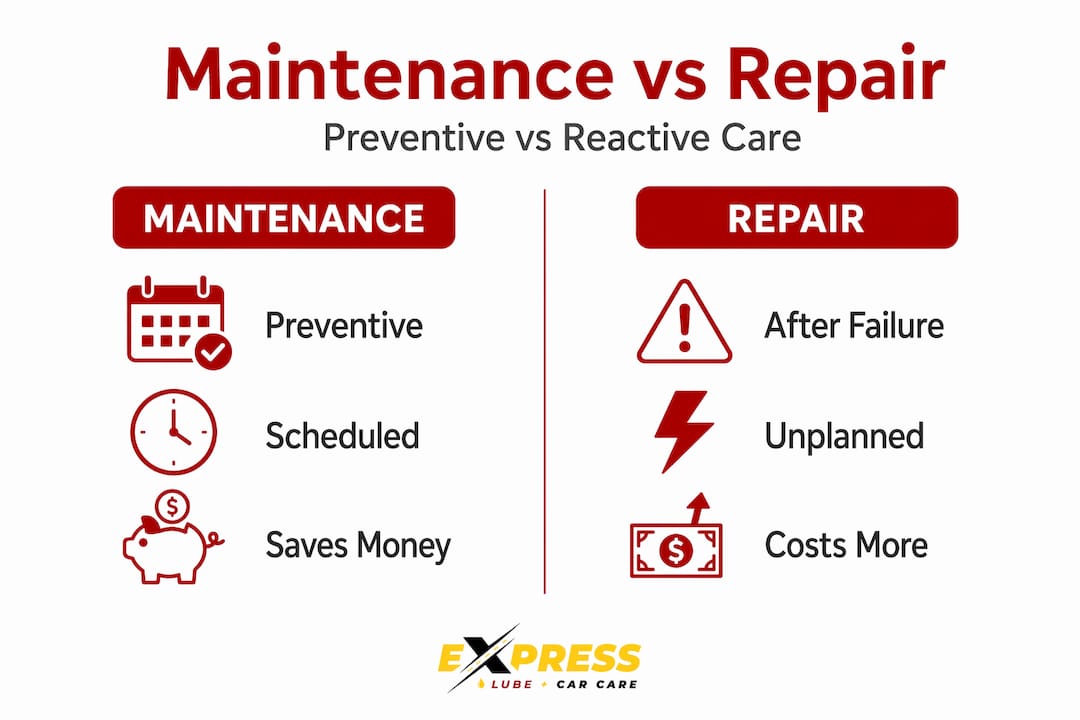
The critical difference between a maintenance schedule and a repair is intent. Maintenance is preventive. Repairs are reactive. Planned preventive maintenance is 4–5 times less expensive than emergency repairs after a breakdown. Following the schedule is not just good practice. It is a financial strategy.
Pro Tip: Save a photo of your owner’s manual maintenance section on your phone. That way, when a service advisor recommends something, you can check it on the spot before agreeing to anything.
The 30-60-90 rule explained
If you’ve heard technicians mention the 30-60-90 rule, it refers to three major mileage milestones where more significant services are typically due. This framework helps vehicles go far beyond 200,000 miles with proper care. Here’s how the services generally stack up across those checkpoints:
| Milestone | Typical services due |
|---|---|
| 30,000 miles | Oil and filter change, tire rotation, air filter replacement, brake inspection, fluid top-offs |
| 60,000 miles | Spark plug replacement, transmission fluid, coolant flush, brake fluid check, battery test |
| 90,000 miles | Timing belt replacement (if applicable), fuel system inspection, throttle body cleaning, full fluid replacement |
The 30-60-90 mile rule does not apply to every vehicle identically. A Toyota with a timing chain has different needs than a Honda with a timing belt. A truck that tows regularly may need transmission fluid far sooner than 60,000 miles. Your owner’s manual tells you what applies to your specific vehicle. Use the 30-60-90 framework as a mental map, not a rigid rule.
Check out the car maintenance schedule by mileage guide for a detailed breakdown of what to expect at each stage.
Pro Tip: Even if your car uses synthetic oil and you stretch oil change intervals to 7,500 or 10,000 miles, do not skip the 30,000-mile inspection. A visual check of belts, filters, and brake pads at that point can catch problems before they escalate.
Why time and condition matter just as much as mileage
Here’s something a lot of car owners miss: mileage is only one piece of the puzzle. Consistent servicing every 5,000 to 7,500 miles or annually is critical for vehicle health, and that “or annually” part is intentional. A car that sits in a garage most of the year still needs service.
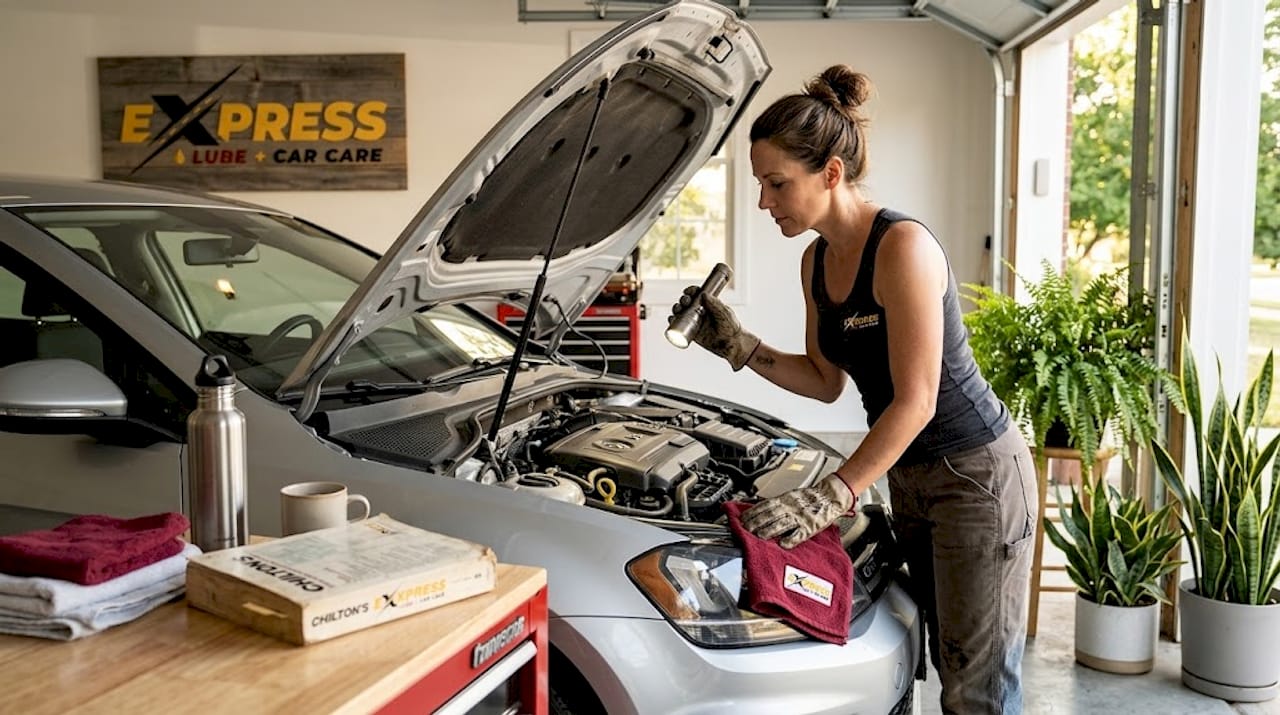
Why? Because fluids oxidize, rubber components dry out and crack, and brake fluid absorbs moisture over time regardless of how far you drive. A two-year-old brake fluid that has never been changed is a safety concern, even if the car only has 8,000 miles on it.
Condition-based checks fill in the gaps between scheduled services. These are things you or a technician can observe without waiting for a mileage milestone:
- Fluid color and level (dark oil, brown coolant, or low brake fluid signal a problem)
- Tire tread depth and pressure (check monthly with a gauge)
- Brake feel (sponginess or pulling to one side warrants immediate inspection)
- Unusual sounds or smells (grinding, squealing, or burning odors are never normal)
- Warning lights (don’t wait to address a check engine or service light)
Pairing mileage-based schedules with monthly condition checks is genuinely the best car ownership strategy. It catches issues early and turns surprise repairs into planned visits. That shift alone reduces stress and saves money in a very real way.
Pro Tip: Set a monthly calendar reminder just to walk around your car. Check tire pressure, look under the hood, and make sure nothing new looks wrong. It takes five minutes and costs nothing.
Common misconceptions about maintenance schedules
A lot of car owners either overpay for services they don’t need or skip services they do. Both mistakes are costly. Getting this right comes down to separating what your manufacturer actually requires from what a dealer service menu suggests.
Here are the most common traps and how to avoid them:
Assuming the dealer menu equals manufacturer requirements. One widely shared example involves a Toyota dealer recommending $2,038 in services for a RAV4 at 30,000 miles, while the actual owner’s manual required only a fraction of those services. Dealer packages often bundle in high-margin items like fuel injector flushes or throttle body services that the manufacturer never specified.
Thinking you must use a dealer to protect your warranty. This is a common fear, but it is not accurate. No legal mandate requires you to service exclusively at a dealership. You can use any qualified shop as long as the work matches manufacturer specifications and you keep records.
Skipping services because the car feels fine. Many maintenance items address components that fail silently. Transmission fluid doesn’t announce its degradation with a warning light. A timing belt doesn’t squeak before it snaps. The car feeling fine is not a green light to skip scheduled services.
Ignoring documentation. Warranty coverage depends on documented adherence to published schedules. If you ever need to file a warranty claim and can’t prove maintenance was performed, the manufacturer has grounds to deny coverage.
“The schedule in your glove box isn’t just a suggestion from the engineers who built your car. It’s the clearest, most honest maintenance advice you’ll ever get, and it costs nothing to read.”
How to customize and apply your schedule
Understanding a schedule is one thing. Using it consistently is another. Here is how to put it into practice in a way that fits your actual life:
Start with your owner’s manual. Locate the maintenance schedule section and note the intervals for your most common services. If you no longer have the manual, manufacturer websites and tools like the maintenance schedule lookup let you access the same information by VIN or vehicle details.
Adjust for severe driving conditions. Severe conditions require shorter intervals to prevent accelerated wear. If you regularly drive less than five miles per trip, tow heavy loads, operate in extreme heat or cold, or drive on dusty roads, your car works harder than normal. That means oil changes, filters, and other services come due sooner.
Keep a maintenance log. A simple notebook or a notes app works fine. Write down the date, mileage, and what was done at every service visit. This log protects your warranty and makes it easier to spot patterns or upcoming due dates.
Use the “first to occur” rule. Whether a service is due at 5,000 miles or six months, whichever arrives first should trigger action. This approach prevents missed services when low mileage drivers let calendar time run ahead of their odometer.
Schedule a multi-point vehicle inspection at least once a year. A trained technician can catch worn components, fluid degradation, and developing problems that condition checks alone might miss.
Pro Tip: Take a photo of your odometer every time you get service. It takes two seconds and gives you an easy record to reference when deciding whether your next oil change or tire rotation is coming up.
My take on what maintenance schedules actually do for you
I’ve talked with a lot of car owners who treat maintenance schedules like fine print. They know they exist but assume a dealer or shop will just tell them when something’s due. What I’ve learned working with vehicles in Richland Hills and the surrounding area is that this approach is where most people lose money.
The owners who come in informed are always better off. They know what services are actually due, they don’t pay for things they don’t need, and they catch small problems before those problems become expensive ones. One customer I remember well drove a seven-year-old Nissan that had never had a coolant flush. The car felt completely normal to her. The coolant, however, had become acidic and was corroding the radiator from the inside. We caught it during a routine inspection before the radiator failed. A $150 flush saved her from a $600 repair.
What I’ve found is that the peace of mind from knowing your vehicle is properly maintained is genuinely worth something. It changes how you feel about long drives, road trips, and daily commutes. You stop white-knuckling it when a warning light flickers and start trusting that your car is in good shape because you can actually prove it.
Take 20 minutes with your owner’s manual. Cross-reference it with what your shop recommends. Keep a log. That’s it. That small investment of time pays for itself many times over.
— Express Lube & Car Care
Keep your schedule on track with professional help
Knowing your vehicle maintenance schedule is step one. Actually following it with a shop you trust is step two. At Express Lube & Car Care in Richland Hills, our ASE-certified technicians handle everything from quick oil changes to full-service repairs, with honest recommendations grounded in what your manufacturer actually requires. No appointments needed. No upsells that aren’t backed by your owner’s manual. We offer transparent pricing, detailed documentation for every service, and the kind of communication that makes you feel confident, not confused. Whether you’re catching up on overdue services or starting fresh, our team helps you build a schedule that works for your vehicle and your budget. Check out our certified repair services and see why Richland Hills drivers keep coming back.
FAQ
What is a vehicle maintenance schedule?
A vehicle maintenance schedule is a manufacturer-specified plan outlining when to service key components based on mileage, time, and driving conditions. It includes services like oil changes, tire rotations, fluid replacements, and inspections.
How often should you service a car?
Most vehicles need an oil change every 5,000 to 7,500 miles or annually, whichever comes first. Major services are typically due at 30,000, 60,000, and 90,000-mile milestones.
Can you void your warranty by skipping dealer services?
No. You can service your vehicle at any qualified shop without voiding your warranty, as long as you follow manufacturer specifications and keep documented records of all services performed.
What happens if you ignore your maintenance schedule?
Skipping scheduled services leads to accelerated wear, fluid degradation, and component failures that cost far more to repair. Reactive repairs cost 4–5 times more than preventive maintenance on average.
What is the difference between mileage-based and time-based service intervals?
Mileage-based intervals trigger service after a set number of miles driven, while time-based intervals trigger service after a set period regardless of mileage. Both matter because fluids and components degrade from age even when a vehicle is driven infrequently.